Who We Are

Establishment
Twenty Years of Practical
Rural Development
Association for Sustainable Development Alternatives (ASDA) was established in 2003 by a group of rural development professionals as a non-profit national NGO.
ASDA was first registered by the Ministry of Justice as an indigenous NGO and re-registered by the Charities and Societies Agency under certificate No. 0247 on 28 October 2009 as an Ethiopian Resident Charity. It is now registered with the Federal Democratic Republic of Ethiopia's Authority for Civil Society Organizations under the same certificate number. A General Assembly is the supreme organ of the association.
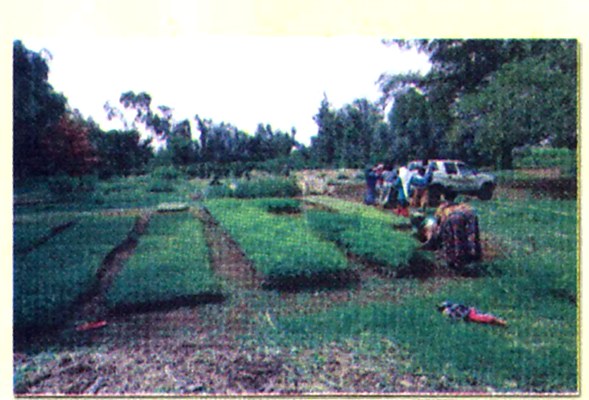
Operations began in 2006 in Dodota Woreda, where ASDA built community-based participatory natural resource management and park conservation activities around the Dhera Block of the Arsi Mountains National Park, Oromia Regional State, with funding from the Arsi Bale Rural Development Programme of the Italian Development Cooperation. Since then the organisation has developed and worked to successive five-year strategic plans.



Vision
ASDA would like to see a poverty-free Ethiopia where food and livelihood are secured and self-reliance is built among rural communities and the urban poor.
Mission
To support the efforts of the rural poor to attain household food and livelihood security while protecting the environment, by promoting economically sound, socially just and environmentally friendly technologies and practices.
Goal
ASDA works with smallholder farmers and their families to contribute towards sustainable improvements in their livelihoods, increasing their capability and protecting their environment.
Strategic Objective
What We Set Out
to Achieve
To enable the marginalised rural poor and smallholders to achieve sustainable development through the promotion of agriculture-based livelihood diversification, participatory natural resource management, the economic and social empowerment of women and youth, and eco-tourism entrepreneurship.
Specific objectives
- Promoting participatory natural resource management and park biodiversity conservation
- Contributing towards the enhancement of household food and livelihood security
- Promoting organic farming, indigenous knowledge and biodiversity
- Building the capacities of communities and their organisations
- Promoting gender equity
Core Values & Approach
How We Choose
to Work
- People helping themselves. Communities are the authors of their own development, not the recipients of ours.
- Viable solutions. Technologies and practices must keep working after the project closes.
- Equality and inclusion. Women, youth and the most vulnerable households are designed in from the start.
- Transparency and accountability. Strong financial management, strict fund administration, supervision and internal control.
Implementation approach
- Working in partnership for inter-agency collaboration and synergy building
- Community-led programmes with strong stakeholder participation
- Integrated, whole-system solutions and public–private partnership
- Institutional strengthening, technical and leadership capacity development
Strategies
Five Strategies that
Shape Every Programme
Build local capacity through community organisations
We promote farmers' and community organisations so they can serve as vehicles for the dissemination of new technologies, and as spring boards for other community development activities.
Connect research, academia, extension and farmers
Institutional collaboration, networking, partnership and constituency building ensure synergy and promote learning and innovation across the research/academia — extension — farmer chain.
Leadership development and team building
Team work and a shared vision inside ASDA and its partner institutions, backed by deliberate leadership development, keep programmes coherent over the long term.
Mainstream cross-cutting issues
Gender, HIV/AIDS, COVID-19 prevention, child protection and environmental protection are mainstreamed into programme design rather than added on afterwards.
Ensure relevance, effectiveness and efficiency
Appropriate policies, strong financial management, supervision and internal control, a focus on sustainability and clear exit strategies are treated as programme management essentials.
Milestones
Our Story
So Far
-
2003
ASDA is founded
A group of rural development professionals establish ASDA as a non-profit national NGO with a General Assembly as its supreme organ.
-
2006
First operations in Dodota Woreda
Community-based natural resource management and park conservation begin around the Dhera Block of the Arsi Mountains National Park.
-
2009
Re-registered as an Ethiopian Resident Charity
Certificate No. 0247 is issued on 28 October 2009, and ASDA adopts its first five-year strategic plan.
-
2017
Second place in the national best-practice award
ASDA receives a trophy, medal and certificate of appreciation in the CCRDA 2016/17 NGO best-practice competition.
-
2018
A seat at the climate policy table
ASDA contributes to the Second African Climate Talks convened by the African Climate Policy Centre of the UN Economic Commission for Africa.
-
Today
Three regions, eight woredas
Programmes run across Oromia, Amhara and the southern regional state, with national registration allowing ASDA to work anywhere in Ethiopia.
Leadership
Who Leads ASDA
Takele Teshome — Founder & Executive Director
ASDA's founder and Executive Director has served the global Climate Smart Agriculture Youth Network (CSAYN) as country coordinator for Ethiopia and is a Food System Ambassador for the East Africa region. He chairs the CCRDA Humanitarian Forum and sits on the board of the Consortium for Climate Change Ethiopia.
Governance
- A General Assembly acts as the supreme organ of the association
- Registered with the FDRE Authority for Civil Society Organizations, certificate No. 0247
- Programme management guided by successive five-year strategic plans
- Annual audit, strict fund administration and internal control
Want to Work with Us
in the Field?